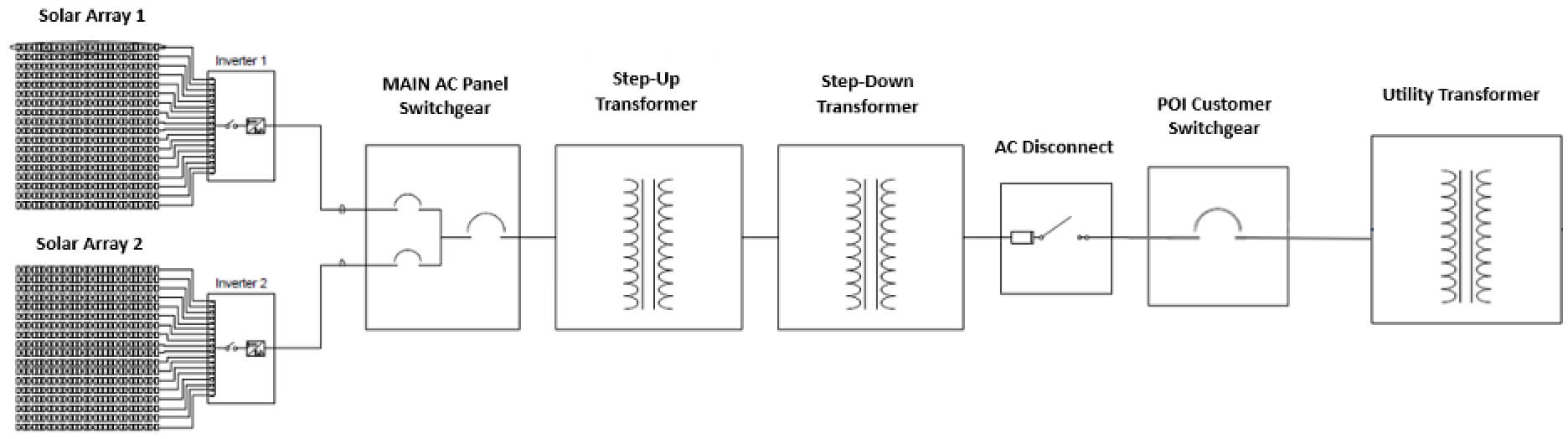
A net metering site customer with 250kW of ground-mounted solar arrays was reporting power quality issues to its local utility. The site’s system configuration included a grounded Wye-Delta step-up transformer and a Delta-Grounded Wye step-down transformer to the POI (point of interconnection), as shown in Figure 1.
The combination of the transformer configuration and the position of the delta transformation essentially created a grounding bank, resulting in an imbalance condition as well as being a zero sequence source. Grounding banks are zero sequence sources that can lead to other factors that impact grid operation, such as incorrect meter readings, protective relays and the potential for ferroresonance.
Figure 1 | Delta-Grounded Wye step-down transformer to the POI (point of interconnection)
The Solution
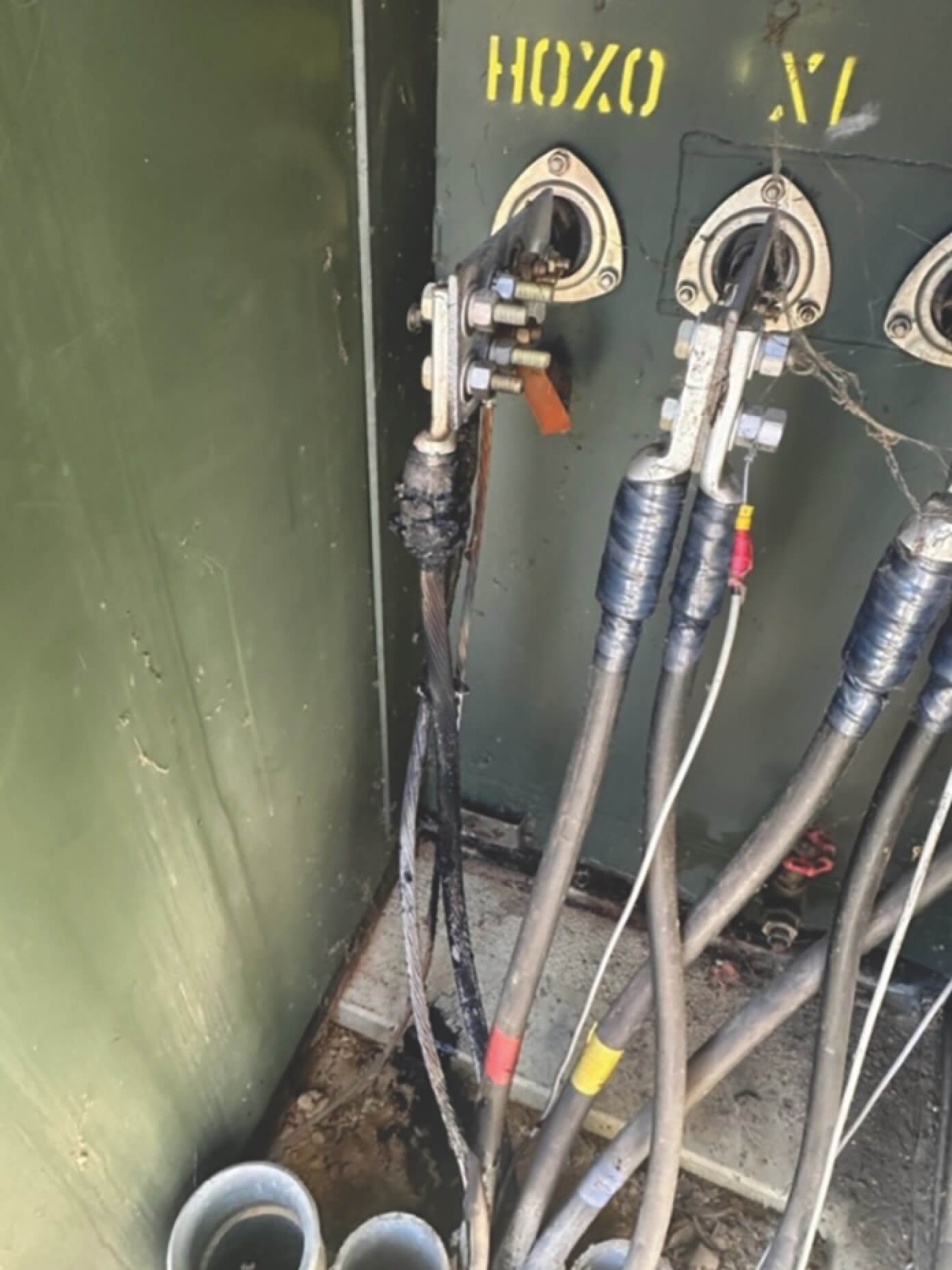
Upon investigating the utility transformer powering the net metering site, the customer found that the neutral cable insulation inside the transformer had melted from excessive heat. Since the net metering site was a school, this created a significant safety risk — when the insulation burns off, it exposes an electrical hazard. So to help pinpoint the root cause, a power quality monitor was installed at the POI.
The power quality analysis equipped the utility with several key insights:
The neutral cable was being overloaded with a significant amount of zero sequence current — approximately 430A of sustained current was flowing through it.
The current phase angles were significantly imbalanced, resulting in the overheating and melting of the transformer’s neutral cable.
The utility transformer was exposed to sustained electrical stress that was shortening its lifespan.
A dissolved gas analysis (DGA) test was also performed on the utility transformer, but it was deemed compliant.
Figure 2 | Melted neutral cable insulation inside the transformer from excessive heat
The Results
Had a power quality monitor been installed on site from the beginning, these power quality issues could have been detected immediately. However, thanks to the deep insights from the extensive analysis, the customer and utility were still able to make several changes, including:
Replacing all secondary cables to the POI switchgear. This was necessary because of the overloading damage to the neutral cable and related conductors.
Replacing the entire utility transformer. This was an added safety precaution, as it was exposed to excessive heat, electrical stress and located near pedestrian foot traffic.
Replacing the Delta-Wye step-up and step-down transformers with grounded Wye-grounded Wye transformer configurations based on the utility’s suggestion.
Permanently applying a mounted power quality monitor to get ahead of these issues before they become a problem.
Detecting electrical imbalance issues is critical to ensuring reliable operations in the grid, particularly for sites utilizing motor-driven systems like this net metering site customer. Increasing visibility early on can help mitigate the resulting electrical stresses and equipment degradation.
See how Powerside power quality monitoring solutions can give you the visibility needed to identify problems early and take proactive measures.
 Skip to the content