What is Power Quality?
Amid the rise of renewables and other new technologies, the U.S. has seen a significant shift in how we generate, store and consume power. These changes present new challenges for legacy T&D grids, leading to an increase in unseen power quality anomalies that can damage power grids and equipment connected to them.
What is a Power Quality Analyzer?
A power quality analyzer is a specialized tool that monitors electrical power signals — such as voltage, current, harmonic distortion and frequency — to identify irregularities like sags, swells, transients and distortion, and then precisely captures the event detail to enable further analysis. Left unchecked, these irregularities can balloon energy consumption, shorten equipment lifespan and cause equipment failures.
In 2022, power quality challenges cost U.S. companies $230B1
There are many types of power analyzers — ranging from standard meters that track consumption and power factor, all the way up to state-of-the-art tech. In this article, we’ll break down the two most important classes of power analyzers and the differences between them.
Class A and Class S Power Analyzers Explained
Today, the International Electrotechnical Commission (IEC) certifies two main classes of power quality analyzers: Class A and Class S. These analyzers represent the latest evolution from Class B analyzers, now deemed obsolete by the power measurement community and the IEC. But whether you’re upgrading from a lower-class analyzer or selecting a net-new monitoring system, it’s crucial to have the right tool for the job.
In recent years, many metering devices and smart meters have added minimal power quality parameters that bring added visibility. However, these should not be labeled as “power quality analyzers,” as they fall well short of being compliant with the international standards.
| Understanding Class A Power Analyzers | Understanding Class S Power Analyzers |
|---|---|
| Class A power quality analyzers are high-precision devices certified to international standard IEC 61000-4-30. They are considered the best for diagnostics and compliance testing due to their rigorous, time-synchronized measurements. | Class S (survey class) power analyzers have lower accuracy requirements. They’re often used for general surveys and basic troubleshooting, but lack the capability to measure with accuracy for certain parameters and demanding conditions, such as non-steady state conditions. |
How Class A and Class S Power Analyzers Compare
| Accuracy and Precision | Class A analyzers are required for high-precision, compliant and disputed measurements, whereas Class S analyzers are intended for general surveys. |
| Sampling and Time Synchronization | Class A devices feature higher sampling rates to capture and timestamp transient events in detail. They also typically incorporate GPS to ensure synchronized timestamps for comparability across devices. Class S focuses on long-term data logging, often with lower frequency requirements. |
| Regulatory and Legal Compliance | Class A instruments are mandated for certifying compliance with power quality standards like EN 50160. Compared to low-tier analyzers like Class S or non–IEC compliant analyzers, Class A devices are critical for disputes where legal or financial penalties are involved. |
| Applications | Class A analyzers are essential for critical infrastructure, utility-level power quality and compliance monitoring. Class S is suitable for routine monitoring, energy audits and troubleshooting. |
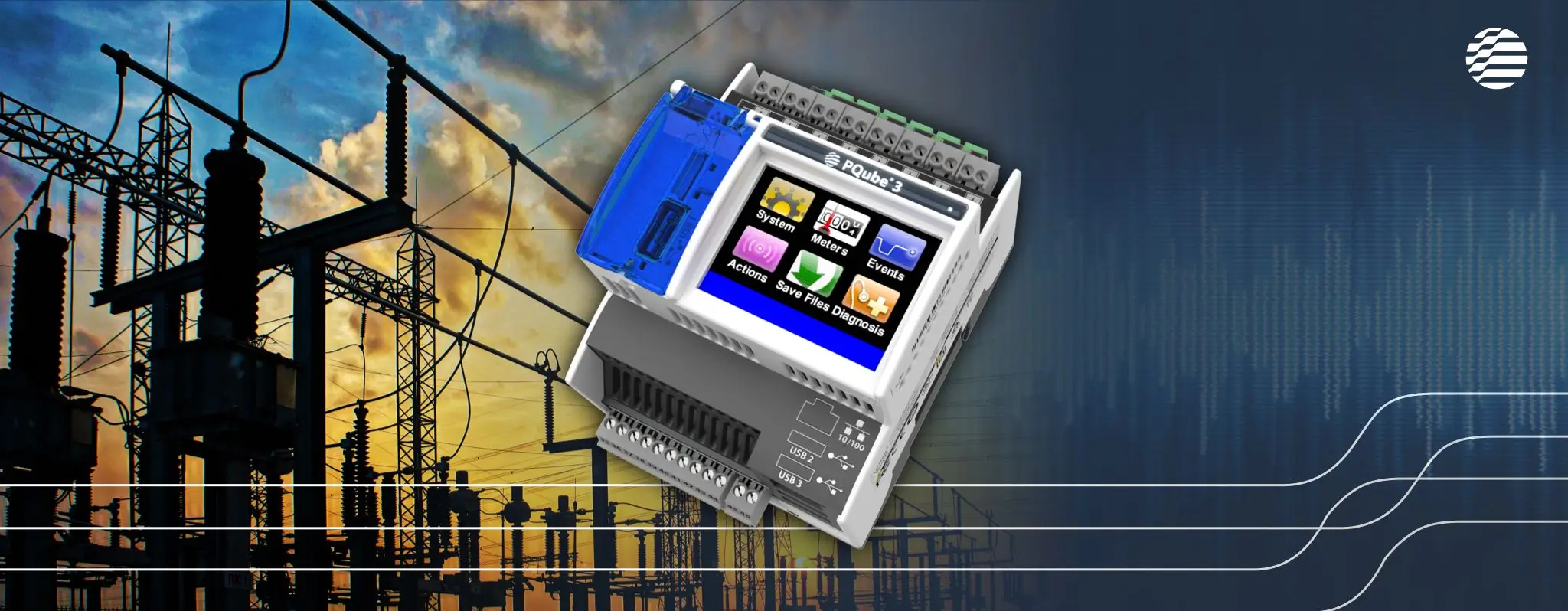
Looking for a Best-in-Class Class A Analyzer? Meet PQube 3®
When it comes to Class A power analyzers, the PQube 3 Power Analyzer is the gold standard for high-precision use in the field. With unmatched capabilities, precision and flexibility, PQube 3 delivers complete visibility to protect your equipment and keep your operations on track. Here are just a few of the features that set PQube 3 apart:
- A 360° Power Quality View: Complete with environmental sensors, multi-load capabilities and advanced AC/DC monitoring that can be overlayed onto power quality analytics and trending.
- Leading Diagnostics and Precision: Built for high-speed detection and rapid root-cause analysis.
- Unmatched Ease of Use: With a compact, plug-and-play design that can be effortlessly retrofitted into existing equipment or used on the go with no software required.
- Remote and Real-Time Monitoring: Delivering unmatched data access and instant alerts through a cloud-based platform — without compromising on security or compliance.
- Cutting-Edge Power Quality Diagnostics: Going beyond even the most stringent Class A requirements for identifying high frequency transients and supraharmonics.
Learn more about PQube 3 and schedule a demo today.
1 Electric Power Research Institute (EPRI), Inc. PQ TechWatch: Societal Costs of Power Quality Disturbances, July 2022