 Skip to the content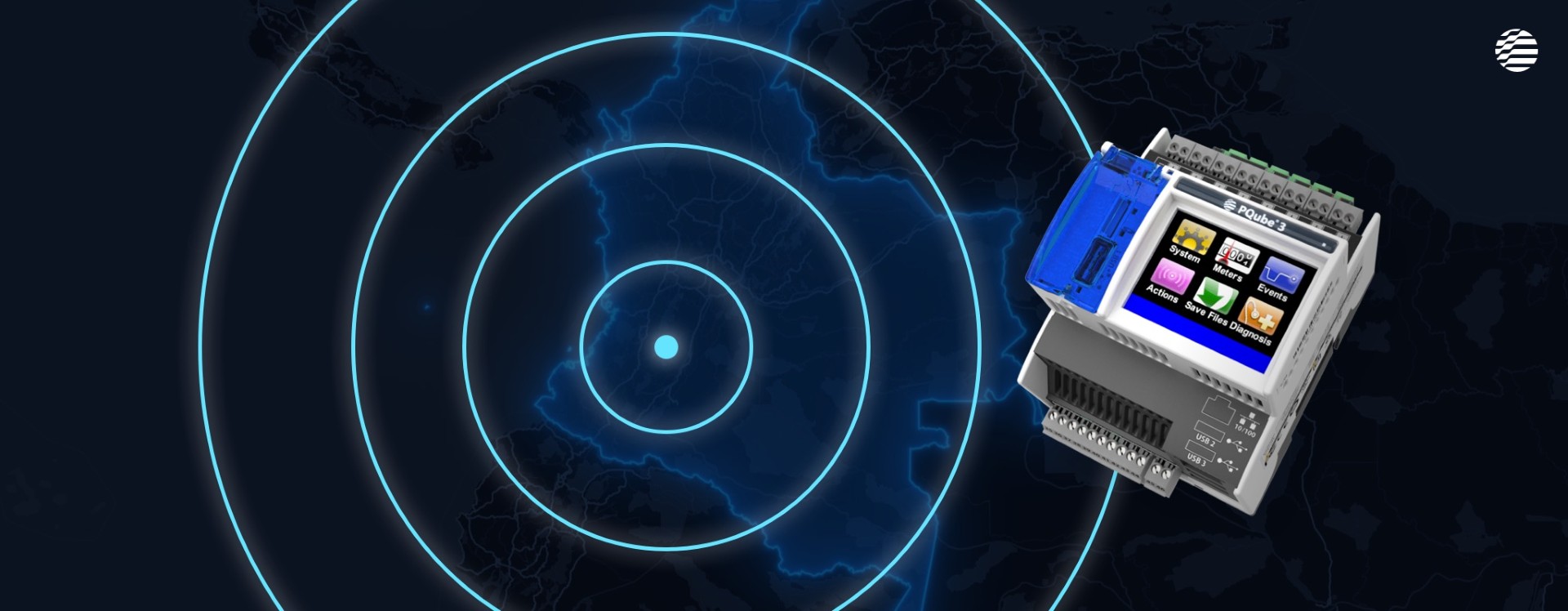
On August 10, 2026, a powerful 7.4 magnitude earthquake struck western Colombia. Beyond the severe physical damage to regional infrastructure, the seismic shockwaves induced immediate mechanical and electrical strain across the national power grid.
At an industrial manufacturing plant near Cali, Colombia, a PQube® 3 Power Analyzer was actively monitoring a primary 13kV distribution feeder. The sub-cycle, high-speed sampling recorded by the device offers a rare, granular look into how medium-voltage industrial circuits react during severe seismic activity:
- 07:35:00 AM (Initial Mechanical Shockwave): The first physical disturbance manifested electrically as a rapid 25% phase-to-phase voltage sag on L1–L2, lasting just 0.05 seconds (50 milliseconds). This brief transient was likely caused by mechanical conductor motion or momentary line clashing on upstream distribution lines.
- 07:35:07 AM (Grid Trip & Interruption): Seven seconds after the initial disturbance, severe physical faults across the regional network forced an upstream circuit breaker trip, cutting power to the facility completely.
- 07:36:00 AM (Automatic Reclosure & Overvoltage): The utility line auto-reclosed and re-energized the facility. However, due to sudden widespread load shedding across the region, the system stabilized at an elevated potential, hovering near the ITIC 10% continuous overvoltage boundary.
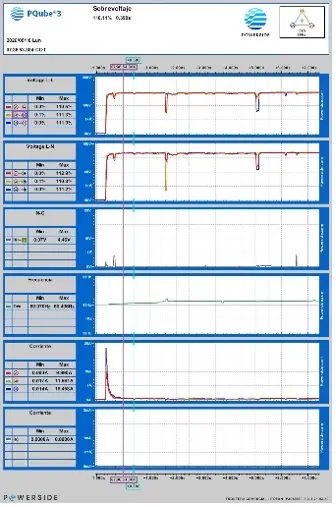
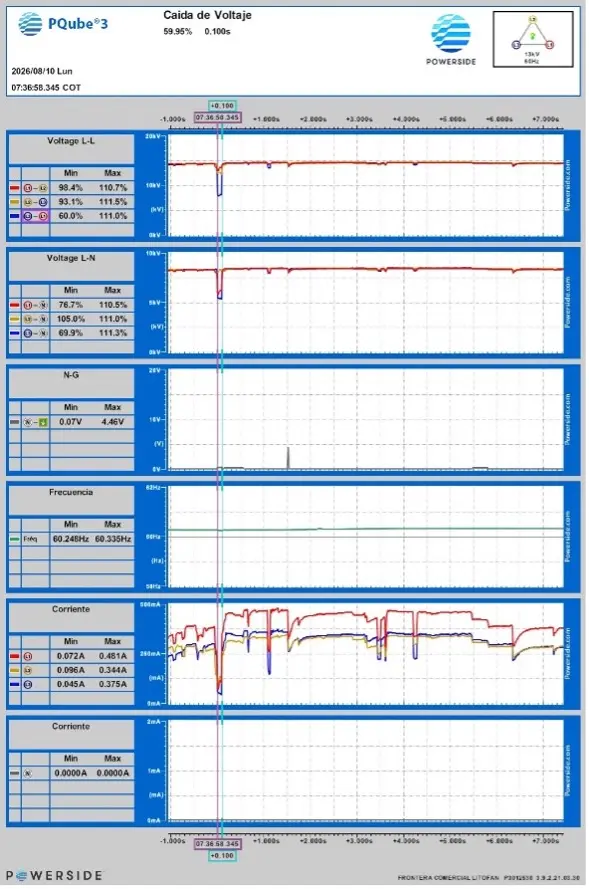
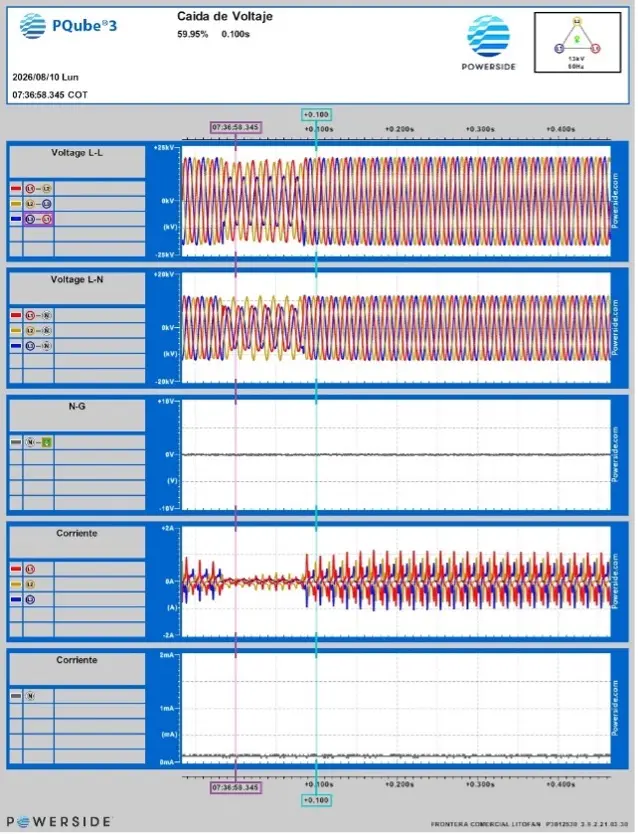
- 07:36:52 AM (Secondary Voltage Fluctuations): The system experienced short-term overvoltage spikes, immediately followed by deep transient voltage sags across phases L1–L3 as neighboring industrial circuits and substations struggled to stabilize.
- 07:37:15 AM (Facility Protection & Shutdown): Unable to maintain continuous operating parameters, the plant’s main protection relay tripped the facility offline. In under two minutes, the PQube 3 logged 10 distinct sags, swells and interruptions before total plant isolation.
Why Does Continuous Power Quality Forensics Matter in Emergency Preparedness?
When natural disasters disrupt the grid, facility managers face critical operational challenges, like verifying transformer health, assessing insulation stress, checking relay performance and determining whether heavy machinery can safely restart.
Classify Grid Health Post-Disaster with PQube 3
- Root Cause & Sequence-of-Events Reconstruction: High-resolution waveform captures distinguish whether equipment failure was caused by external utility instability or internal facility faults.
- Equipment Stress Audit: Identifying transient overvoltages and sag durations helps maintenance teams inspect sensitive drives, programmable logic controllers (PLCs) and transformers before reapplying full power.
- Streamlined Insurance & Warranty Claims: Time-stamped, revenue-grade microdata provides undisputed proof of grid anomalies, simplifying claims for damage caused by external power events.
While grid disturbances during extreme natural events are unavoidable, lack of visibility is not. Installing advanced power quality analyzers like the PQube 3 ensures facility managers have the definitive forensic data needed to safeguard assets, maintain compliance and safely accelerate operational recovery.